
What New York Property Tax Records Show
A few distinct records make up the picture. The assessment roll carries value and exemption fields. The bill sets the charges and their due dates. Payment detail appears only where a local collector publishes it, and delinquency or tax-sale material lives somewhere else again. That distinction matters, because a warrant or court filing can describe a kind of debt the roll never mentions. Each document answers its own question, and each has its own custodian.
| Field | What It Shows | Where |
|---|---|---|
| Assessment roll | Parcel, class, assessed and full value, exemptions, taxable values, and roll dates. | Municipal assessor or assessment department; state dataset for final rolls outside NYC. |
| Tax bill | Charges, taxing jurisdictions, due dates, and payment status if shown. | Municipal receiver or collector, or county tax office. |
| Exemption detail | Codes and amounts by taxing jurisdiction; the code needs a data-dictionary key. | Local roll and assessor; Open Data final-roll fields outside NYC. |
| Local delinquency or tax sale | Arrears, notices, certificates, or proceedings when held and published locally. | Municipal collector, county treasurer or clerk, and court if a case is filed. |
| State tax warrant | A public state tax lien record, not by itself a local real-property tax balance. | State tax-warrant route and filed record; confirm the debt and parcel context. |
| Historic tax roll | Past assessed owner or parcel clues, with uneven years and indexing. | County holdings and New York State Archives research routes. |
No single statewide viewer shows a current New York tax bill. The final-roll dataset helps you find parcels and values. It is not a live ledger of charges or payments. For any amount due, go to the local collector or treasurer. Keep the bill year separate from the roll year.
New York Roll Route: County to TOV
The state publishes local assessment-roll instructions as the starting point. Pick the county first. Then choose the city, town, or village, along with its SWIS code. Some municipalities carry more than one SWIS code. Select the town/city/village (TOV) option matching the parcel. Open Local Officials Addresses and follow the roll link on the local official's site. If no roll is posted there, try the county website.
A second path runs through the Municipal Data Portal. It offers county-first profiles, municipal contacts, and roll-date context. Save the county, municipality, SWIS, and parcel key before you chase a bill. The assessor may host the roll while a receiver or collector holds the actual bill.
ORPTS announced a newer Municipal Profiles, Sales Web, and Rates platform in June 2025. Older bookmarks may point to the prior interface. Confirm the live route and the local link before starting a search. The state route is a directory path to the local custodian. It is not a shared bill form.
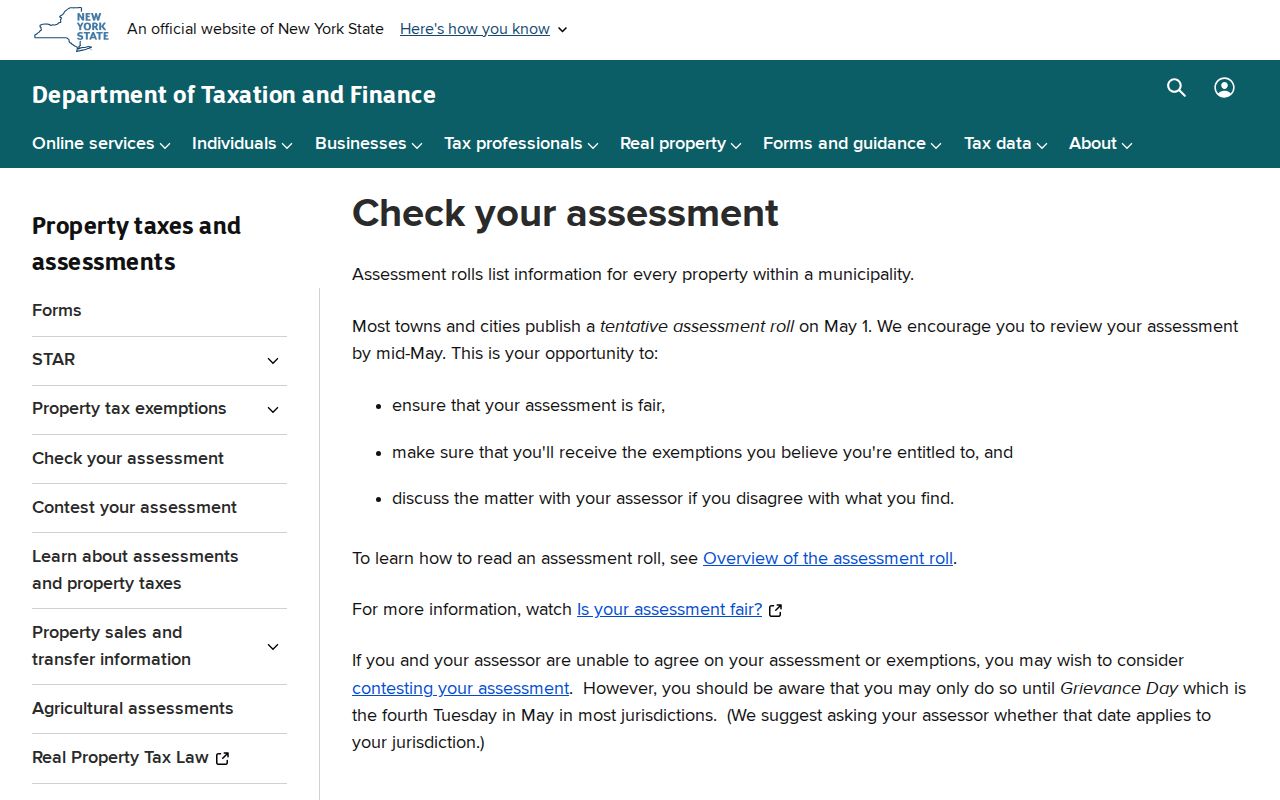
Choosing the county and TOV options correctly keeps the roll tied to the parcel's assessing jurisdiction.
New York Roll Fields Decode Tax Values
New York's official tentative-roll guide names the fields worth knowing before you compare values. The Open Data assessment set holds final-roll rows from 996 local governments. All of them sit outside New York City. That is its whole scope. It is not the city's roll system. It is not a live bill. And it makes no promise that every local field is current. A local roll may simply be a PDF rather than an interactive search page. Use the parcel key, and read the roll's own year and status line.
| Roll Field | What It Identifies | How to Read It |
|---|---|---|
| Roll year and roll section | The record year and type of property entry. | Check the year and decode an unfamiliar section in the state data dictionary. |
| County, municipality, SWIS | The local taxing and assessing context. | Confirm the municipality, especially where a postal city differs. |
| Print key or tax-map parcel | The local parcel identifier. | Preserve punctuation and use the same key when moving to GIS or a bill. |
| Property class and location | Class and situs information attached to the parcel. | Compare like classes and verify that the row names the right parcel. |
| Assessed and full-market value | Assessment and the roll’s full-value measure. | Read with the level of assessment and valuation date. |
| Exemption codes and amounts | Roll reductions shown by taxing jurisdiction. | Use the data dictionary; a code alone does not state eligibility. |
| Taxable value by jurisdiction | Tax base for county, town, school, or other districts. | Do not treat it as the final amount due on a bill. |
The state assessment dataset exposes these final-roll fields for comparison. Its metadata and data dictionary define the scope and the codes. The official tentative-roll field guide explains each label shown in the table and pictured below.
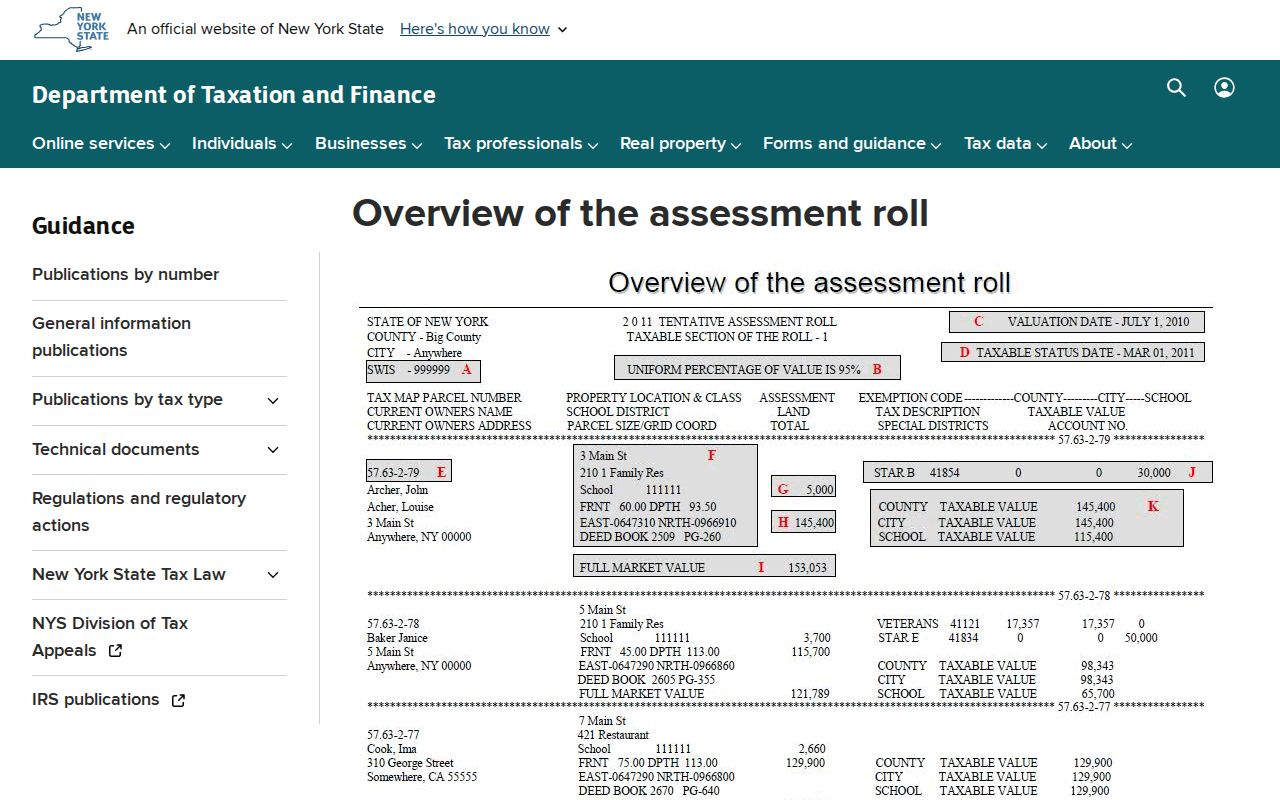
The roll field guide ties SWIS and tax-map identifiers to value and exemption entries. None of that converts into a bill amount.
Looking Up a New York Tax Bill
Once the parcel and municipality are known, follow the local billing path. An assessment row is not a balance. A school bill, a municipal bill, and a county record can sit with different offices. They follow different schedules. New York offers no one statewide current-bill lookup. The state Open Data file reports no live payment status. The amount due comes from the office that mailed the bill.
- Use the county and municipality route to identify the local tax collector or county office.
- Open the bill source and search by its address or parcel/account key; local fields differ.
- Read the bill year, taxing jurisdictions, charges, due dates, and payment status only if the official source displays them.
- Check the assessment roll separately for exemptions and taxable values; ask the collector about a balance or delinquency.
An address with no parcel attached needs a different first step. Use the New York property search route to pin down the parcel, then carry that local key into the roll and bill system. Fees, online access, and request options all remain local.
- Assessed value
- The value placed on the roll by the local assessor under the applicable assessment system.
- Full-market value
- The roll’s full-value estimate, distinct from assessed and taxable value.
- Levy or rate
- A charge set by a taxing jurisdiction; the assessor does not set each jurisdiction’s tax rate.
- Exemption code
- A roll code and amount tied to a taxing jurisdiction; consult the state dictionary and local assessor for its meaning.
- Tax warrant
- A state-tax lien record, which is not the same record as local real-property tax delinquency.
New York Tax Dates Shape Each Roll
Assessment records are snapshots, and each carries its own date. March 1 is the typical taxable-status and exemption date. Many municipalities publish a tentative roll near May 1. Grievance Day often lands on the fourth Tuesday of that month. July 1 is the common final-roll date and also the state framework's valuation-date convention. Always read the date printed on the actual roll, since local schedules drift.
Bill timing follows its own calendar. School bills often arrive in September. County or municipal bills come in early January, subject to local variation. A roll year, valuation date, status date, final-roll date, and bill year are not interchangeable labels. The New York property-tax calendar lays out the typical sequence and its local-variation warning. Treat it as a prompt to check each municipality's own roll and notice dates.
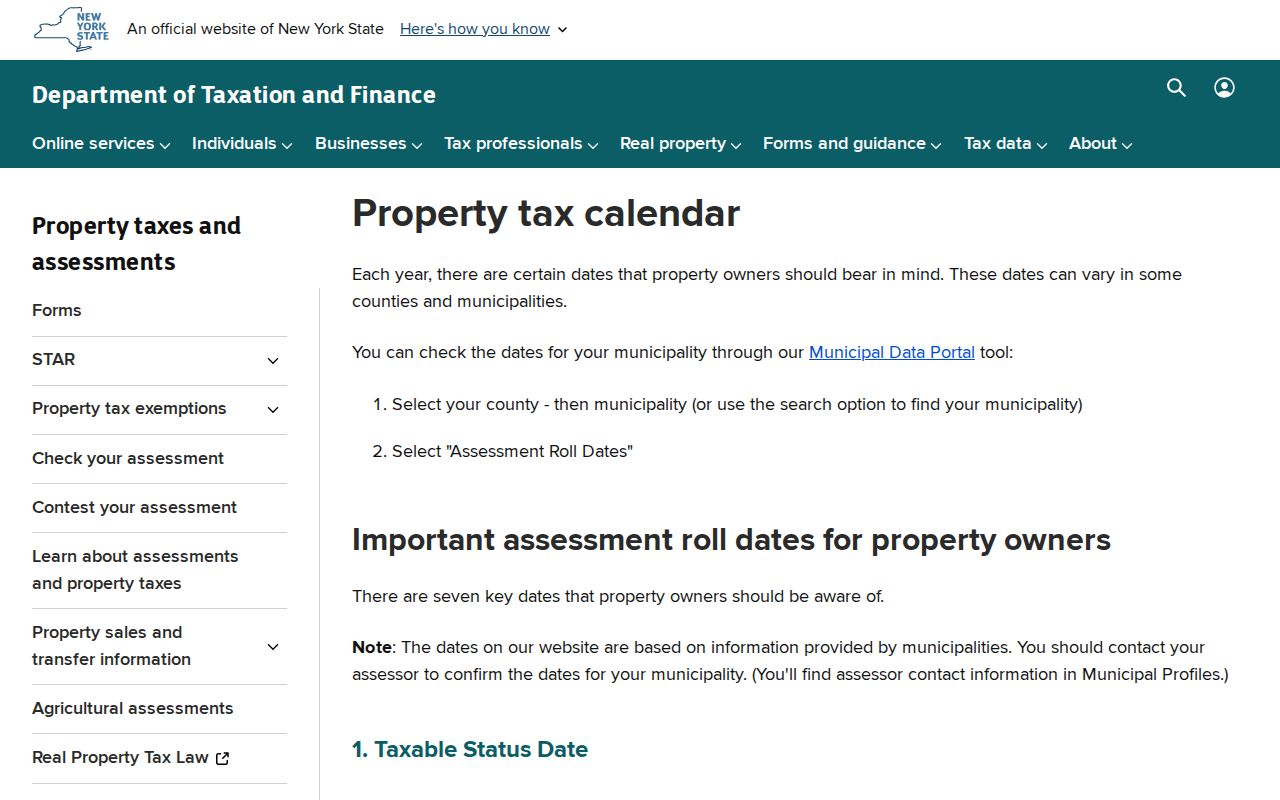
Those milestones explain why a recent change may not show up on every record at the same time.
New York Exemptions Change Taxable Value
Exemption codes appear on many New York tax rolls. They are listed with amounts for county, town, city, village, school, and special-district levies. A code alone tells you little. It does not explain eligibility or prove the exemption still stands. Look the code up in the state data dictionary. Then ask the local assessor which application or record controls any unclear field. Remember that a shift in exemption, class, assessment, or taxing district can change taxable value. This holds even when the parcel itself never changed.
Assessed value, full value, and taxable value are three different figures. The level of assessment compares the first two. New York City and Nassau County follow their own statutory structures. For a grievance, weigh the assessor's market estimate against fair market evidence. A bill that runs high because of a levy or rate is the taxing jurisdiction's doing. The assessor sets neither. The state's assessment-contest guidance lays out the review route and value comparison. Its calculation page helps separate a roll estimate from the amount actually charged.
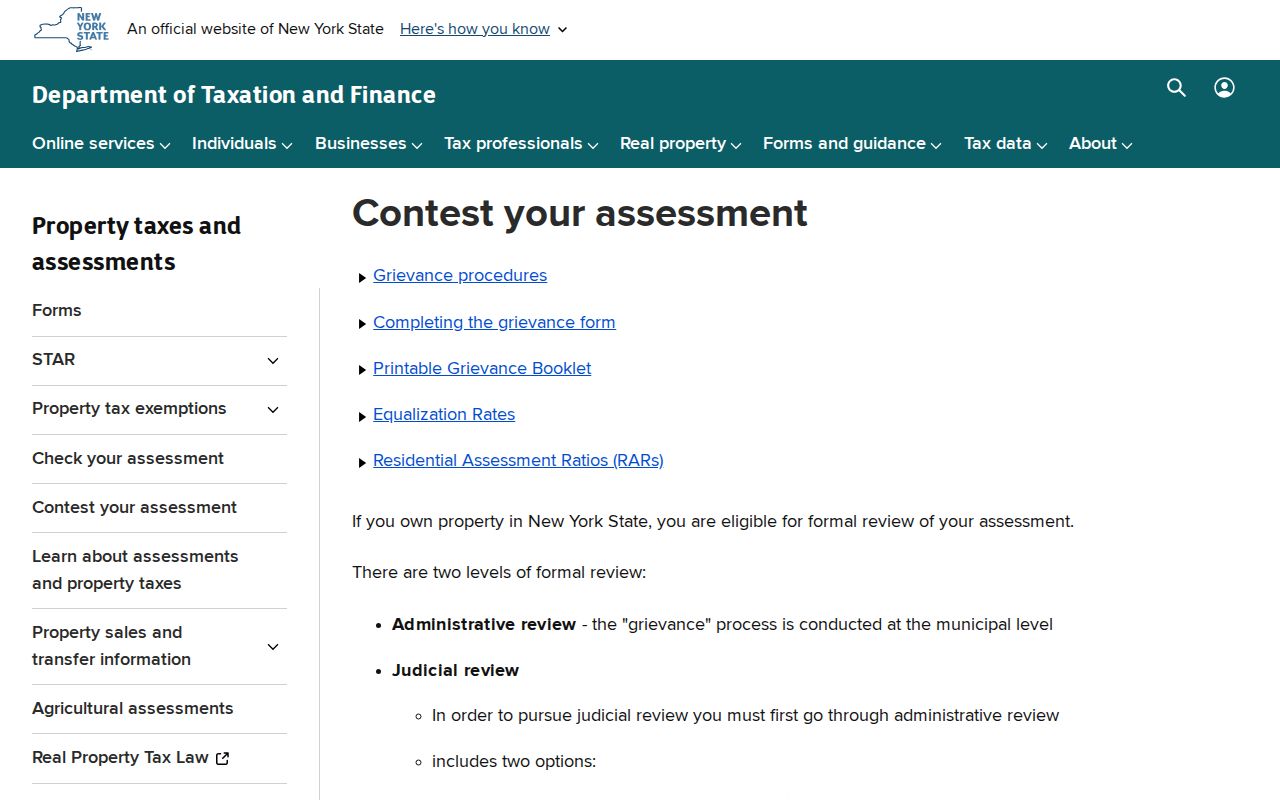
When a value and a bill disagree, read the assessor's field beside the taxing office's figures. One number explains worth, the other explains the charge.
New York Historic Tax Rolls Need Context
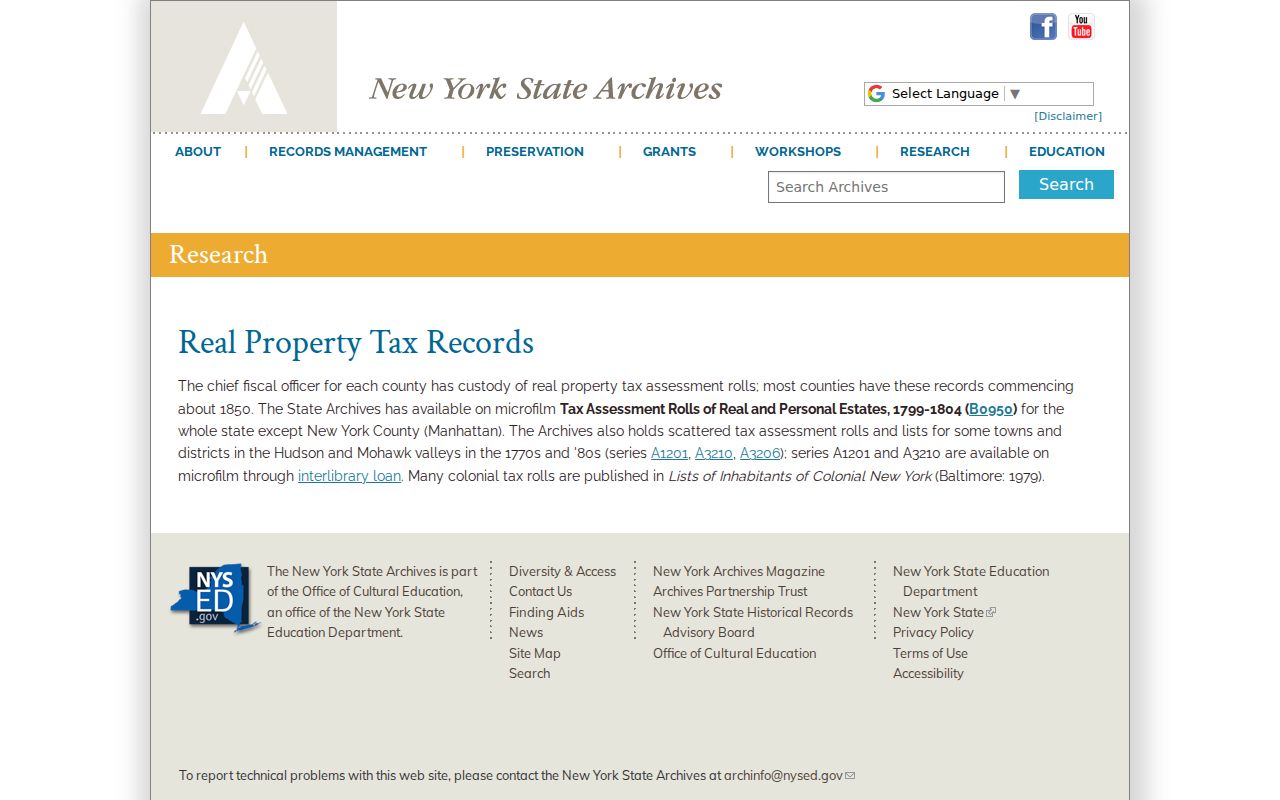
A historic tax roll can answer a house-history or estate question. It names an assessed owner, lot, or parcel clue from an earlier year. They are not deeds. Many lack a name index entirely. The State Archives describes county rolls from roughly 1850 in many places. A statewide 1799-1804 assessment series covers everywhere but Manhattan, and scattered colonial material also survives. What exists still depends on the county, town, year, and series.
Note the county, town or ward, roll year, series, reel, and page before requesting a scan or microfilm. The Archives' local-government holdings and interlibrary-loan options help when an online portal runs out. Access and turnaround vary widely. Tie any historic name back to the recorded deed or filed map before calling it a property transfer. The State Archives tax-roll guide describes these holdings and how to identify a series.
An old roll can point toward a deed or map. It remains one dated record, though, in a longer property trail.
New York Property Tax Warrants Are Different
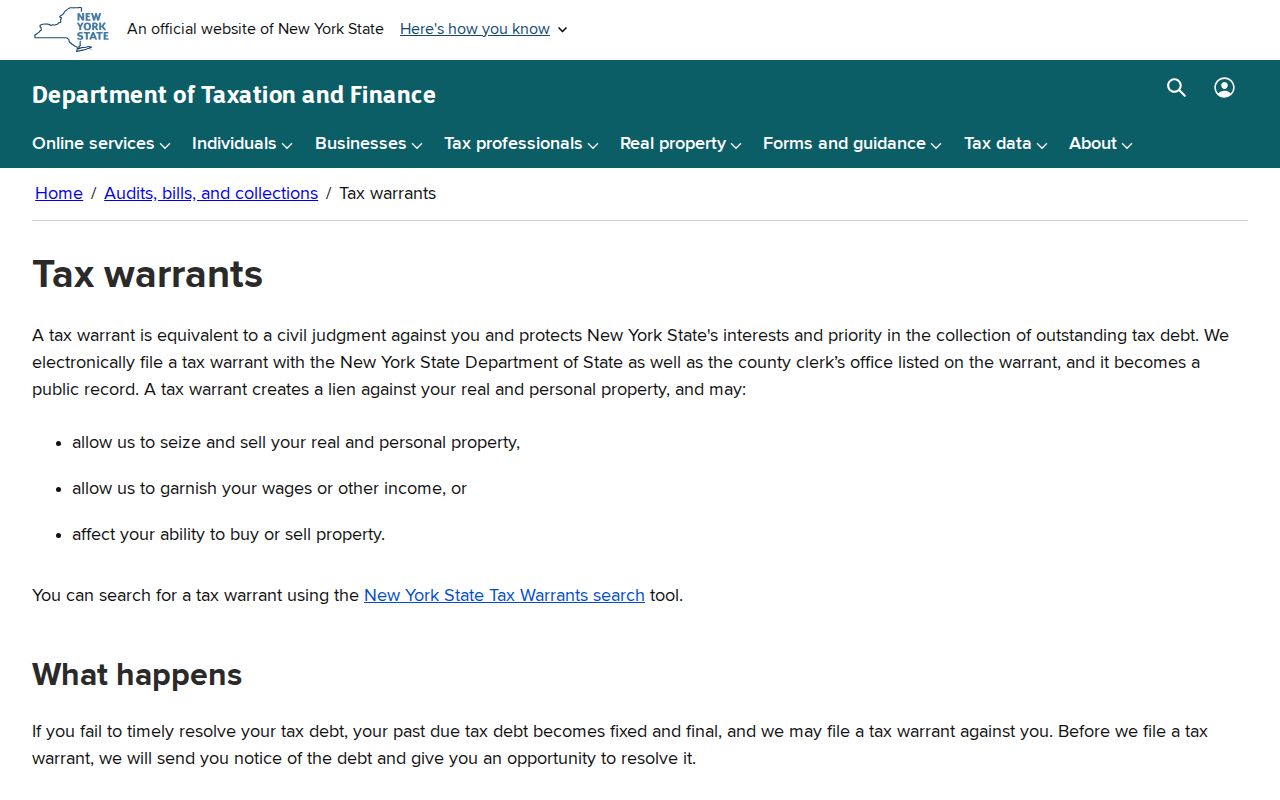
Local property-tax delinquency and a state tax warrant are different animals. New York's tax-warrant system covers public warrants filed with the Department of State and a county clerk. Each creates a public lien against real and personal property. A warrant hit does not prove local tax arrears on any particular parcel. Confirm the debtor, the tax type, the filed record, and the parcel connection first.
For a local balance, tax sale, or foreclosure notice, go to the municipality's receiver or collector. The county treasurer or clerk is the other stop. If a foreclosure case has been filed, pull the court case information. Then ask the court clerk for the actual papers. Never label a state warrant a property-tax delinquency without those checks. The New York tax-warrant page explains the state route and how it differs from local collection systems.
Use the warrant source to confirm the state filing, then check the local parcel and its tax custodian on your own.
FOIL and New York Court Records
New York's Freedom of Information Law, or FOIL, is a request route for an existing record held by a covered state or local agency. Name the agency, municipality, roll year or bill record, parcel key, date range, and preferred format. Be specific. The agency need not build a new property report or chase a broad research question. Anything already posted should come from its local custodian first.
Courts generally sit outside FOIL. When tax foreclosure or a related case is in play, start with NYS Courts e-Courts for available case information, then ask the proper clerk for the judgment or file. A docket summary is never the complete court record. The New York FOIL page explains the agency request path, while a tax bill still runs through the county or municipal office.
Appeal a New York Assessment on Time
Start with the tentative roll. Compare the assessor's estimate against fair market evidence for the valuation date. Where the level of assessment sits below 100 percent, the state guide says to divide the assessment by that ratio. That estimates full value. A fair assessment with a high bill points elsewhere. It points to the rate or levy each taxing jurisdiction sets, not to a grievance. Keep the roll, parcel key, comparable official sales, and the local deadline notice on hand.
Outside New York City and Nassau County, the state's grievance booklet explains filing the RP-524. It goes to the Board of Assessment Review. Later judicial review, including SCAR where eligible, is a separate step. New York City and Nassau County run distinct assessment structures and appeal paths. Do not assume the same RP-524 route or date applies there. Check the correct local agency's current instructions before anything else. The RP-524 grievance booklet is the state form guidance for its stated scope. The municipality can confirm the current roll, reassessment date, and filing deadline.
Appeal window. Grievance Day is local, even where the usual calendar points to late May. Confirm the parcel’s municipality and filing deadline with its assessor or Board of Assessment Review, and submit the correct papers before that date.