
Tracing New York Former Owners
Work backward from the parcel's most recent deed. Each recorded transfer gives a date, a grantor, and a grantee. It also includes a reference like a book and page or an instrument number. Chain those together. The former owners of a New York parcel emerge in order. Treat the table here as an outline only, not a sample deal. Confirm every name against the actual record before relying on it.
A statewide starting point exists. The NYS Land Records county selector routes searchers into participating county systems. It is the most common entry for deed research. It is not one unified search form. Coverage and the earliest online records differ from county to county.
| Transfer Date | Grantor → Grantee | Deed Type | Book/Page |
|---|---|---|---|
| Date on the latest deed found | Named parties as recorded | Instrument description | Reference to retrieve the image |
| Date on the prior conveyance | Prior grantee matched to the next grantor | Instrument description | Reference from the index or deed |
| Date on an earlier link | Repeat the party match, then verify the land | Instrument description | Continue in the county series |
Set the first link with the latest deed and its prior-document references. When those references run out, the grantor and grantee indexes, deed books, historic maps, and tax rolls may extend the search. Their dates and access points vary by county and record series. New York has no single cutoff. Keep the land description beside the parties for every New York parcel, so a matching name alone never carries the chain. That habit keeps prior owners tied to specific instruments rather than to a bare list of names.
New York Deed Index Depth
New York has no single statewide online cutoff for historic deeds. County systems differ, and record types inside one system can begin in different years. Broome and Monroe each publish their own SearchIQS coverage pages. The listed ranges separate deed books, index books, mortgages, discharges, lis pendens, and historical grantor-grantee indexes. A blank result can mean the name, instrument type, town, or year falls outside that index. It does not prove a deed was never recorded in New York.
Before reaching farther back, read the local coverage page beside the county search. A representative Broome coverage statement and Monroe coverage statement show why county-specific descriptions matter. The SearchIQS form can filter by party, date range, document group, town, book and page, instrument number, and case number. Available fields and indexed towns vary. Search each prior party as a grantee, and confirm the parcel before accepting any match.
Coverage has no statewide cutoff. Broome and Monroe list different ranges by record type; older New York chains may continue in deed books, county microfilm, or uneven State Archives holdings.
Read New York Deeds Backward
Open the latest recorded deed for the parcel. Study the parties and the legal description. The grantee in that deed may show up as a grantor in an earlier conveyance. Search that name in the earlier period. Pull the matching instrument, and compare its property description and prior references. Keep going until the indexes or deed books stop supporting another verified link. An address alone is a weak guide for an old New York chain. Streets, lot numbers, and parcel keys all change over time. Trust the recorded description over the street name.
- Find the parcel’s latest deed and note the grantee, grantor, recording date, description, and prior-document references.
- Search the grantee’s name in the county’s earlier grantor-grantee index as a possible prior owner.
- Compare the returned instrument’s land description, municipality, and parcel history, not just the party name.
- Repeat with each verified link; when the online index ends, ask which books or archival series cover the next period.
- Grantor
- The party who conveyed the interest shown in an instrument.
- Grantee
- The party named as receiving that interest.
- Chain of title
- The linked conveyances used to follow claimed ownership over time.
- Reverse index
- A county name index searched by party role and date to find an earlier instrument.
- Legal description
- Words or map references that identify the land and help test whether two deed entries concern the same parcel.
- Quitclaim / warranty
- Different deed labels; read the instrument text because its label alone does not prove the parcel’s full title history.
Deed types matter in this work. A quitclaim, fiduciary deed, or other instrument may carry a different legal effect. It may not read like a standard sale. The description and the recorded context show what the instrument said. But they do not replace a title review. To locate or request a single instrument, use the separate New York deed records route. The former-owner task is linking one transfer to the next.
New York Roll Dates and Past Owners
A New York assessment roll preserves the owner reported for a particular taxable-status date. A deed recorded after that date will not appear. So the roll may still list the earlier name even though a conveyance was already on file. Treat the roll as a dated clue for tracing former owners. Never treat it as a deed index or title abstract. Keep the roll year and status date beside the transfer date. That way you avoid reading two records from different cycles as a contradiction.
For each link in a New York chain, record the exact party spelling, role or capacity, county, municipality, deed date, recording date, and book and page or instrument number. A trustee, executor, estate, or company name should stay exactly as the instrument showed it. A parcel may have been split, combined, or renumbered. Compare the legal description and any map reference before deciding the names refer to the same land.
Historic New York Tax Rolls
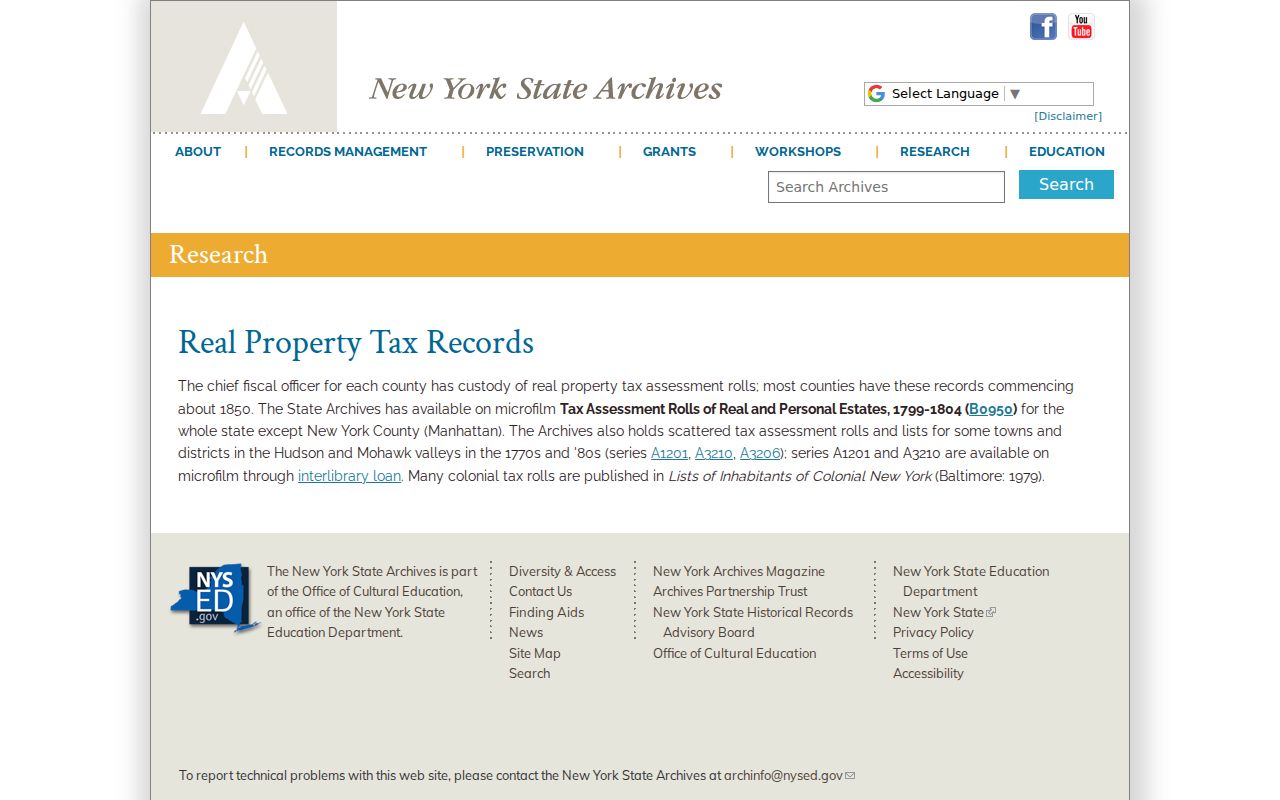
Old tax rolls can push a New York property story further back. They go past the point where a modern deed index runs out. Holdings vary widely by county and year. The State Archives reports many counties represented from roughly 1850. Its B0950 series covers 1799 through 1804 except Manhattan, along with scattered colonial rolls. None of these are parcel-owner databases in the modern sense. A roll may be arranged by town, ward, lot, or year. Many have no name index. Knowing the land's location and the series details matters more than anything else.
The New York State Archives tax-roll guide lays out the county holdings. It also covers the route for ordering or viewing them. Expect uneven coverage rather than a uniform span of years across every county.
Treat a roll as a clue generator. A name, lot, or occupancy hint found there should send you back to recorded deeds, plat maps, and deed records to confirm the chain. A tax-roll entry never conveyed title by itself.
New York Archives and Deed Books
Electronic indexes only reach so far back. When a New York deed search hits that wall, older records are the next stop. Turn to county clerk grantor-grantee books, deed volumes, or local-government microfilm. The State Archives traces the history of county-clerk land records. It also offers historic research services. Microfilm holdings differ by county and series, so a finding aid opens a door. It is not a statewide index. When requesting a reel, give the record series and the county or town arrangement. Add an approximate year, plus the page or lot if known.
Recording practice shifted over the centuries, which matters for deed research. The Archives real-property pathfinder notes that most deeds after 1683 were recorded with county clerks. New counties had to record deeds starting in 1794. A statewide recording requirement arrived in 1823. Colonial and early deeds sometimes went unrecorded entirely. So a missing online entry never proves an old conveyance did not exist.
New York City Former Owners
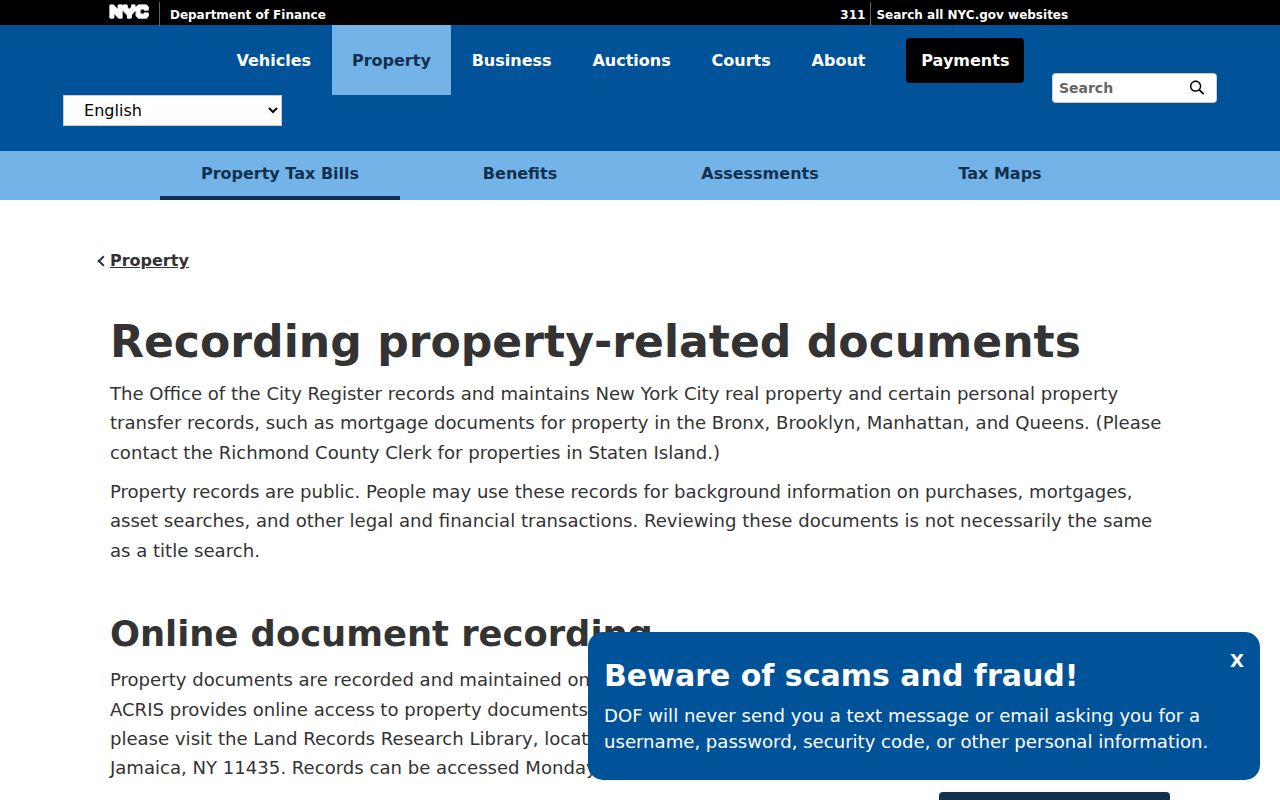
New York City breaks from the rest of the state. Its property records are organized differently. Manhattan, the Bronx, Brooklyn, and Queens rely on ACRIS. That system generally covers recorded documents from 1966 forward. Richmond County, covering Staten Island, still follows the county clerk route.
For anything earlier in the other four boroughs, there is an older path. The Land Records Research Library and borough-office guidance explains it. A current borough search cannot replace every earlier chain of title. The pre-1966 guidance spells out that route. Its image reflects a New York City exception. It is not a statewide deed-search screen.
Record what each match gives you. Keep the borough, block and lot, the instrument identifier, and the date range the source itself states.
New York Estate and Name Clues
A Surrogate's Court file can answer why an estate representative later conveyed a parcel, or why an owner of record changed names between deeds. The actual file and court information follow the county clerk route through New York Courts guidance. Probate authority supplies context, not proof that title passed. Look for the recorded deed or fiduciary instrument and compare the land description before calling an estate file a chain link.
Vital-record indexes and historic city directories can resolve a spelling, death, marriage, or address clue. The state genealogy service carries restricted eligibility windows and local-record exceptions. The New York State Library directory guide describes its historical directory collections. An index entry or directory address is only a lead. It never proves a person owned the parcel, and restricted records deserve their protections.
Limits on New York Former Owners
Historic ownership research can serve house history, estate work, or careful property diligence. Public names should stay tied to the parcel question. Never treat a former owner's historic address as a present residence. Never stitch unrelated identity details together. Test each link against recorded instruments and official archives. Respect the protections covering personal records.
Lawful use. Former-owner records can help with a home’s history and parcel diligence. Do not use names or old addresses to track, threaten, or harass a person.
A missing online result marks the limit of the source searched. It is not a final answer about the land. State the series and coverage you actually checked, then follow the proper county or archival route for the rest.